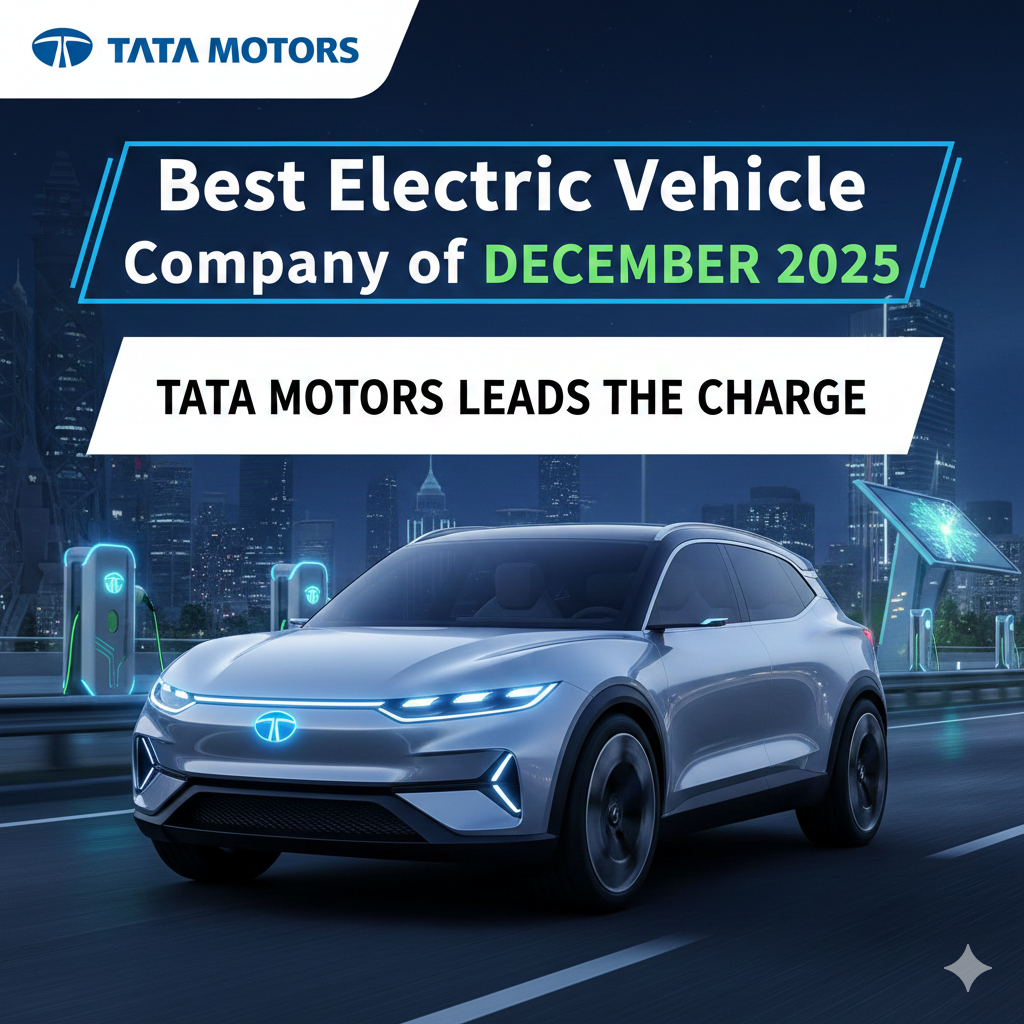
As 2025 draws to a close, India’s electric vehicle (EV) market continues its impressive growth trajectory, driven by new model launches, improving infrastructure, and rising consumer adoption. According to the latest VAHAN portal data as of December 29, 2025, Tata Motors Passenger Vehicles has emerged as the top-selling EV company for the month of December, registering 5,231 units. This performance solidifies Tata’s longstanding dominance in India’s passenger EV segment, where it maintains a commanding market share.
Tata Motors: The Undisputed LeaderTata Motors has long been the pioneer in India’s EV journey, and December 2025’s figures highlight its continued strength. The company offers a diverse portfolio of six electric models, including popular options like the Nexon EV, Punch EV, Tiago EV, Curvv EV, and Harrier EV. These vehicles cater to a wide range of buyers, from compact city cars to premium SUVs.For the full calendar year 2025, Tata Motors recorded 68,558 EV registrations, marking a solid 12% increase over the previous year. Earlier in December, the company celebrated a major milestone by surpassing 2.5 lakh (250,000) cumulative EV sales in India, holding around 66% of the total electric passenger vehicle market to date. Models like the Nexon EV have been particularly successful, becoming the first Indian EV to cross 1 lakh cumulative sales.
This consistent performance reflects Tata’s early entry into the segment, strong brand trust, competitive pricing, and investments in charging infrastructure. With plans to introduce more models by 2030 and expand public fast chargers, Tata remains the benchmark for reliability and volume in India’s EV space.
Strong Competition from JSW MG Motor India
Coming in second place for December is JSW MG Motor India with 3,054 registrations. The company offers three EV models, but its standout success has been the MG Windsor EV, which emerged as the best-selling electric vehicle of 2025 overall.
Thanks to the Windsor’s popularity — featuring innovative Battery-as-a-Service (BaaS) options, spacious design, and tech-rich features — JSW MG more than doubled its EV volumes. The company jumped from 21,802 units in 2024 to 50,853 units in 2025, showcasing explosive growth and capturing a significant share of the market, often challenging Tata in monthly rankings.
Here are some standout visuals of the highly popular MG Windsor EV, India’s top-selling electric car in 2025:The Windsor’s combination of affordability, features, and flexible ownership has made it a favorite, especially in urban and semi-urban markets.
Mahindra & Mahindra: Rapid Rise in Third Place
Mahindra & Mahindra (M&M) secured third position in December with 2,600 EV registrations. The company has aggressively expanded its EV lineup with the “Born Electric” Origin SUVs, including the XEV 9e, XEV 9S, BE 6, and special editions like the BE 6 Formula E Edition.
M&M’s EV sales more than doubled from 7,135 units in 2024 to 33,008 units in 2025, reflecting strong demand for its premium, feature-packed models with long ranges (up to 683 km certified) and advanced tech like ADAS and triple-screen setups. These vehicles have attracted many new customers to the brand.
Surprise Fourth Place: VinFast Enters the Fray
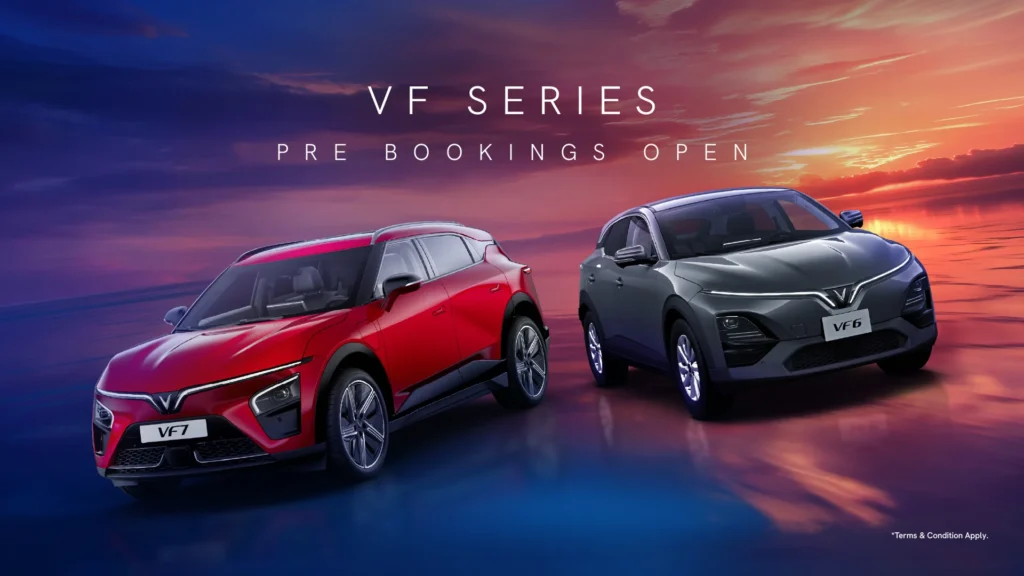
In an unexpected development, Vietnamese EV maker VinFast claimed fourth place with 321 registrations in December. Having entered the Indian market in 2025 with SUVs like the VF6 and VF7, VinFast has quickly gained traction and even overtaken established players like Hyundai and Kia in monthly EV rankings.
Top-Selling EV Companies in December 2025 (VAHAN Data as of Dec 29)
- 1. Tata Motors — 5,231 units (6 models)
- 2. JSW MG Motor India — 3,054 units (3 models)
- 3. Mahindra & Mahindra — 2,600 units (Multiple Origin SUVs)
- 4. VinFast — 321 units
India’s EV market is heating up with fierce competition, new entrants, and innovative models. Tata Motors’ December lead reaffirms its position as the best electric vehicle company of the month, but the rapid gains by JSW MG, Mahindra, and others signal an exciting, more diverse future for electric mobility in 2026 and beyond. With more launches on the horizon, 2026 promises even greater acceleration in India’s EV revolution!