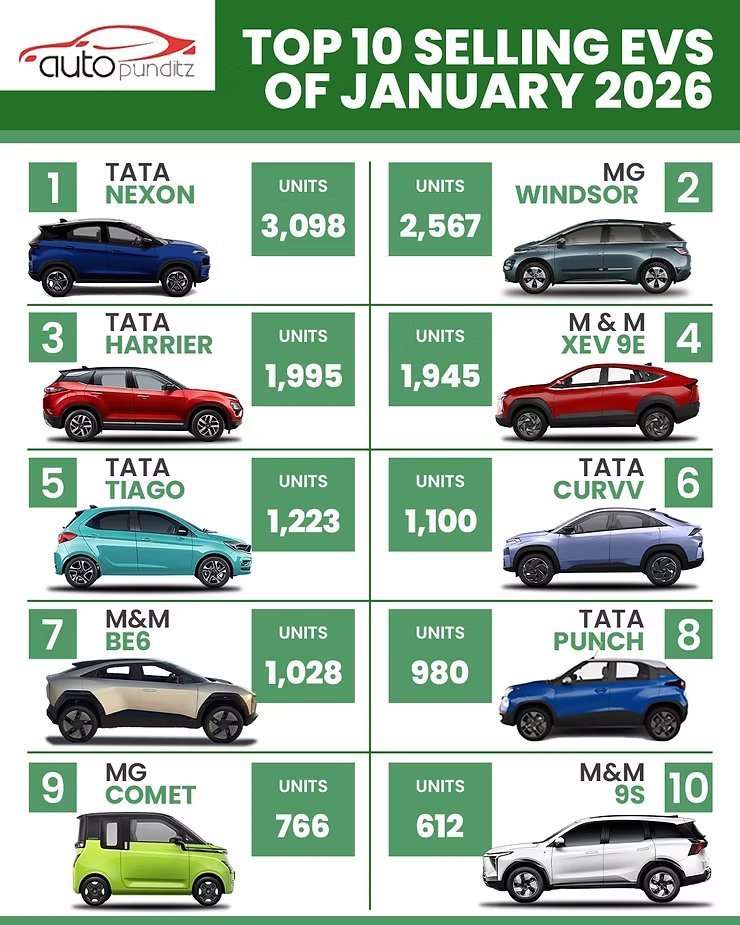
India’s electric vehicle market continues to heat up in early 2026, with Tata Motors staging a strong comeback in the individual model sales charts. After being dethroned as the best-selling electric passenger vehicle in calendar year 2025 by the surging MG Windsor EV, the Tata Nexon EV has reclaimed the crown in January 2026, signaling renewed momentum for the compact EV SUV segment.
According to the latest sales data, the Nexon EV registered 3,098 units in January 2026, edging out the MG Windsor EV’s 2,567 units. This marks a significant shift, as the Windsor had dominated much of 2025 — even finishing as India’s top-selling EV for the full year with over 46,735 units shipped, comfortably ahead of the Nexon EV’s annual tally (around 24,612 units in one reported comparison).The Nexon EV’s resurgence comes amid broader positive trends for Tata’s EV lineup. The brand’s overall electric passenger vehicle sales hit record highs in recent months, with January 2026 seeing Tata deliver around 7,852–8,007 units across models, securing a market share of approximately 43%. This performance helped Tata claw back ground from competitors like MG Motor (around 26% share) and Mahindra (20%).
Harrier EV: Premium Demand Soars
Adding to the cheer is the Tata Harrier EV, which has emerged as a major demand driver in the premium electric SUV space. The larger, feature-rich Harrier EV has consistently posted strong numbers, with reports of it outselling the Nexon EV in select months (e.g., 2,458 units in November 2025, making it Tata’s top internal contributor at times). Buyers are upgrading to its longer real-world range (over 500–600 km claimed), AWD options, V2L capabilities, and spacious interiors. Industry insiders note waiting periods of 16–25 weeks in some cases, with cumulative sales pushing toward 25,000 units by March 2026. The Harrier EV’s success underscores growing appetite for premium EVs in India, where families seek more space, tech, and capability without compromising on zero-emissions appeal.
Curvv EV Crosses 1,100 Units Milestone
The Tata Curvv EV, the coupe-SUV in Tata’s electric portfolio, has also shown steady progress. Recent monthly figures indicate it has crossed the 1,100-unit mark in a single period (with peaks in prior months), contributing to Tata’s diverse EV offerings. While not yet a volume leader like the Nexon or Harrier, the Curvv EV appeals to style-conscious buyers with its sleek design, up to 502 km ARAI range (55 kWh variant), and competitive pricing starting around Rs 17.49 lakh. Its sales trajectory reflects Tata’s strategy of covering multiple segments — from affordable compacts to premium crossovers.
Market Context and What It Means
The Nexon EV’s return to the top individual spot highlights several dynamics:
- Value resurgence — The more affordable Nexon EV (with strong ecosystem support, charging network, and proven reliability) is regaining favor post-GST adjustments and festive-season momentum.
- Competition intensifying — MG’s Windsor EV, with its innovative Battery-as-a-Service (BaaS) model and family-friendly features, remains a fierce rival but saw a dip (e.g., 29% MoM decline from December 2025’s 3,596 units).
- Overall EV growth — January 2026 saw total electric passenger vehicle sales around 18,000–21,000 units (up 50%+ YoY in many reports), with EVs now holding 3.6–4.5% market share.
Tata’s portfolio strength — Nexon EV for entry-level buyers, Harrier EV for premium seekers, and Curvv EV for design enthusiasts — positions the brand well as competition from Mahindra (XEV 9e), VinFast, and others heats up.As 2026 unfolds, expect more battles in the EV charts. For now, the Nexon EV’s comeback is a reminder of why it became India’s first EV to cross 100,000 cumulative sales — and why Tata remains the undisputed leader in electric mobility. Stay tuned for February figures, which could solidify these trends further!