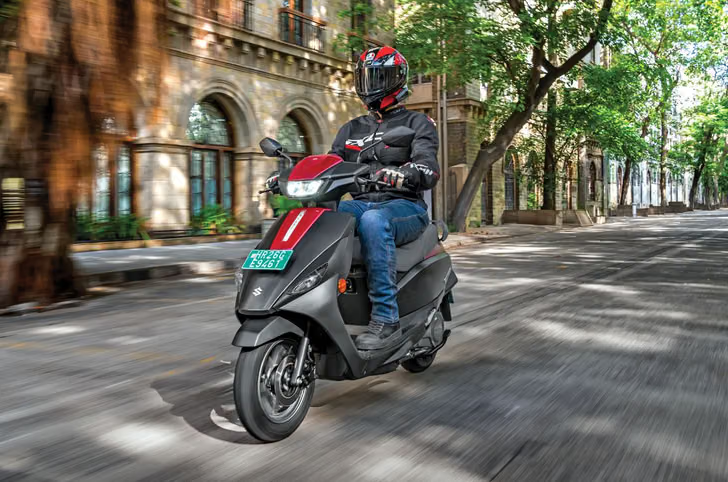
Suzuki first showed the e-Access back in January 2025, but it was actually launched only a year later, in January 2026. While the e-Access has definitely lost the first-mover advantage in the burgeoning electric scooter market, the bigger question is whether it has at least come prepared with a product that can hold its own against established rivals.
The e-Access carries the familiar Access nameplate and benefits from Suzuki’s reputation for refined, reliable scooters. In the metal it feels well built, with solid fit and finish that stands out in the segment. The design is clean and understated rather than flashy, staying true to the practical character that made the petrol Access so popular. Three riding modes — Eco, Ride A and Ride B — allow riders to balance efficiency and performance, while regenerative braking and a reverse function add everyday convenience.
Performance is tuned for city use rather than outright thrills. The electric motor delivers smooth and linear acceleration with a top speed of around 70 km/h, making it easy and predictable in traffic. It does not offer the strong, instant pull that some more powerful rivals provide, but the throttle response is progressive and confidence-inspiring for daily commuting. The chassis and suspension deliver composed handling and a comfortable ride over typical urban surfaces.
The 3 kWh LFP battery is engineered for longevity and safety, with a claimed range of 95 km. Independent real-world testing has returned figures in the high 80s under mixed conditions, which is adequate for most city runs but lags behind several competitors that offer larger batteries and longer claimed ranges. Charging is handled by a portable 600 W unit that takes roughly six hours for a full top-up from empty. Under-seat storage is modest, which may disappoint riders who need space for a full-face helmet or daily shopping.
Priced at approximately ₹1.88–1.92 lakh ex-showroom, the e-Access sits at the premium end of the electric scooter market. At this level it faces stiff competition from models that often deliver more range, stronger performance or greater practicality for similar or lower money. Suzuki’s strengths — build quality, refined ride and brand trust — are clearly present, yet the package feels conservative in a segment that has moved quickly on technology and value.
The e-Access is a competent, well-finished electric scooter that prioritises reliability and ease of use. It may not redefine the category or reclaim the first-mover ground Suzuki missed, but for riders who value the Access legacy and prefer a no-drama, high-quality daily commuter, it offers a polished and trustworthy option. Whether that is enough to succeed in a crowded and price-sensitive market remains the key test ahead.