
Honda has officially launched the all-new Honda e:N2 in Thailand in 05 March 2026, marking a significant step in its electric vehicle lineup for Southeast Asia. While the car impresses with its premium design, strong range, and feature set, its launch raises an important question for Indian buyers: Is Honda arriving too late to India’s booming EV market?
The Honda e:N2 (also known as a rebadged version of the e:NS2/Insight in some markets) is a stylish electric fastback crossover/SUV built on Honda’s e:N Architecture F platform. It blends sedan-like elegance with practical crossover appeal.
Key Specifications:
- Battery: 68.8 kWh CATL NMC lithium-ion battery
- Power: 204 PS (150 kW) front-mounted electric motor
- Torque: 310 Nm
- Claimed Range: Up to 530 km (NEDC) — real-world expectations around 400+ km depending on conditions
- Wheels: 18-inch alloys
- Dimensions: Approximately 4,787 mm long, with a 2,735 mm wheelbase (offering spacious cabin and boot)
The design features a sleek, grille-less front, sharp lines, wrap-around LED lighting, flush door handles, and a sloping roofline that gives it a sporty, premium stance. It comes loaded with modern features including a large touchscreen, Heads-Up Display, ventilated seats, Bose audio, panoramic sunroof, aroma diffuser, and full Honda Sensing ADAS suite (with multiple cameras and radar).
This “modular edition” brings next-generation updates with excellent real-world usability. The combination of strong torque for effortless acceleration, refined ride quality (typical of Honda), and long range makes it a compelling package in the competitive electric crossover segment. In Thailand, it is priced starting around 1.429 million Baht (roughly ₹35-40 lakh equivalent, depending on exchange and taxes), positioning it as a premium offering.
While Honda is actively expanding its electric portfolio in markets like Thailand and China, its progress in India has been relatively slow.
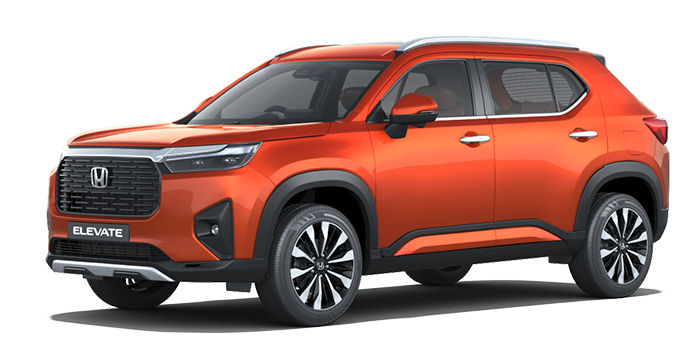
- Honda plans to launch its first battery electric vehicle in India in 2026 (likely an Elevate-based EV or a new model).
- The company is focusing on hybrids in the short term while gradually introducing EVs.
- In contrast, rivals like Tata (Nexon, Curvv, Punch EV), MG (ZS EV, Windsor), Hyundai (Creta Electric, Ioniq 5), Mahindra (XUV400, BE 6, XEVO), and others have already established strong footholds with multiple models, aggressive pricing, and widespread charging networks.
Is Honda Late to EVs?
Yes, relatively speaking — especially in high-growth markets like India.
- Many Indian competitors launched competitive EVs years earlier (e.g., Tata Nexon EV in 2020, MG ZS EV, and newer models like Curvv EV, BE 6, etc.).
- Honda has excelled with strong-hybrid models (e.g., City, Elevate hybrids) but full BEVs have lagged.
- Globally, Honda recently canceled or scaled back several North American EV projects (like parts of the 0 Series) due to softening EV demand, high costs, and shifting regulations, leading to significant financial hits. The company is pivoting toward hybrids in some regions while continuing selective EV pushes in Asia.
Has the Honda e:N2 Launched in India?
The e:N2 has not launched in India.
There are currently no confirmed plans to bring this specific Thailand/China-derived model to the Indian market. Honda’s India EV strategy focuses on locally developed or adapted models for better cost, localization, and suitability to Indian conditions.
Honda’s India EV Timeline:
- Honda’s first full EV in India is expected in 2026 (likely Q1 or mid-2026), with more in FY 2026-27.
- Key candidates include an Elevate-based EV (potentially with a different nameplate) and the Honda 0 Alpha (0 α) electric SUV, which has begun pan-India testing. The 0 Alpha is a made-in-India model aimed at global markets, with strong range (targeting ~500 km+) and local production at Tapukara.
- Honda plans multiple electrified launches (hybrids + BEVs) through 2026-27, positioning India as a key market alongside Japan.