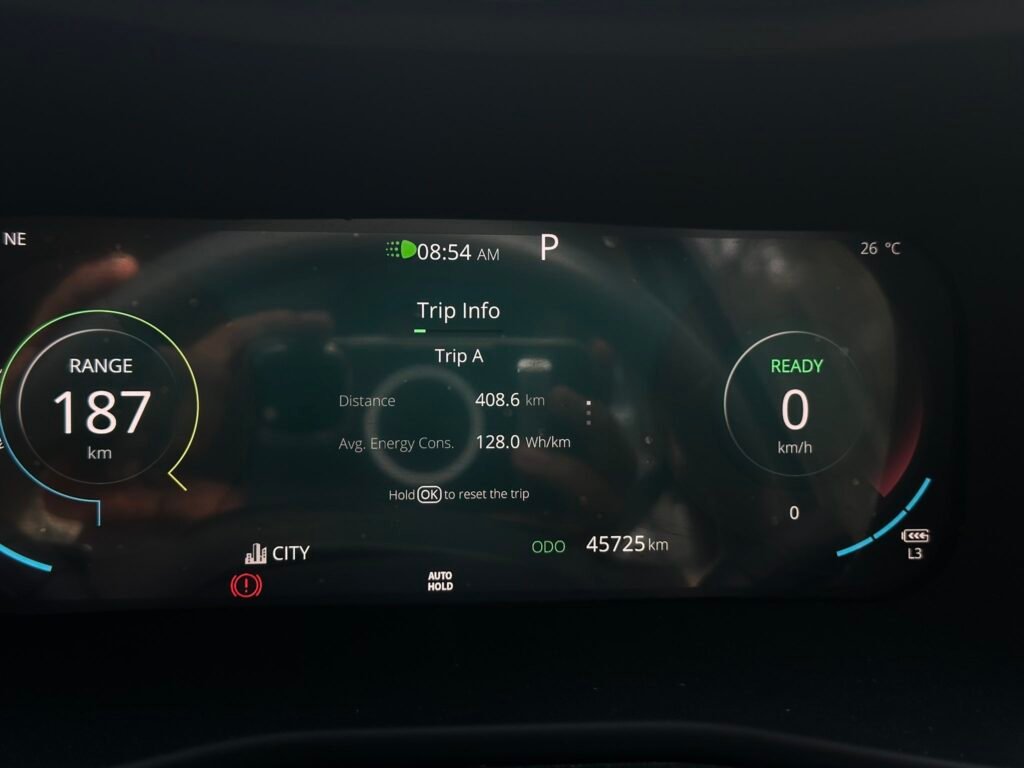
Electric vehicles in India are often judged on range anxiety, charging challenges, and long-term costs. However, Selvakumar D (@Gs_Wanderer) has offered a powerful real-world perspective after completing 207 days and 45,725 km with his Tata Nexon EV—showing how EV ownership can translate into serious financial and practical benefits.
Backed by detailed records and transparent calculations, his journey highlights why EVs are steadily becoming a smarter alternative to internal combustion engine (ICE) vehicles.
In just under seven months, Selvakumar covered nearly 46,000 km, a distance that many car owners take years to achieve. Despite a 35-day Europe holiday, during which the car remained unused, the Nexon EV continued to deliver strong overall efficiency and reliability.
This usage pattern makes his experience especially valuable, as it reflects both intensive daily driving and real-life downtime.
Charging Costs: Home vs Public Network
Most of Selvakumar’s charging was done at home, supplemented by public fast chargers when required.
Home Charging
- Electricity used: ~5,400 units
- Cost: ~₹37,958
Public Fast Charging
- Zeon Charging
~648 units → ₹19,540 - Statiq
~780 units → ₹18,950
Total Charging Cost
- Combined: ~₹76,448
- Effective energy cost: ~₹1.67 per km
If the vehicle had relied only on home charging, the cost would have dropped further to around ₹1.5 per km.
Service and Maintenance: Minimal and Predictable
One of the biggest advantages of EV ownership is lower maintenance due to fewer moving parts.
- Total service and maintenance: ₹22,381
- Includes all scheduled services till date
Compared to regular oil changes, clutch replacements, and engine-related repairs in ICE cars, the Nexon EV’s maintenance expenses remained modest.
Overall Running Cost: Just ₹2.1 per km
When charging and servicing are combined:
- Total running cost: ~₹2.1 per km
- Includes home charging, public charging, and maintenance
This figure demonstrates how EVs can drastically reduce everyday operating expenses, especially for high-mileage users.
Comparing with Petrol: Massive Savings
Had Selvakumar driven a petrol car for the same distance, the cost would have been significantly higher.
Petrol Estimate
- Distance: ~45,725 km
- Mileage: 14–15 km/l
- Current fuel prices
- Estimated cost: **₹3.5 lakh+
EV Reality
- Charging + Maintenance: ~₹1 lakh
- Savings: ₹3,00,000+
Even after factoring in public fast charging and service costs, the financial gap remains substantial.
Why the Tata Nexon EV Made the Difference
Selvakumar’s experience reinforces the strengths of electric vehicles from manufacturers like Tata Motors:
- Low energy cost per kilometre
- Predictable maintenance expenses
- Convenient home charging
- Strong reliability over long distances
- Reduced dependence on fluctuating fuel prices
For daily commuters, intercity travelers, and fleet users, these advantages translate into long-term peace of mind and savings.
A Real-World Case for EV Adoption
Selvakumar D’s 207-day journey with the Tata Nexon EV is more than just a personal milestone—it is a data-backed case study on the economic and practical viability of electric mobility in India.
With:
- Over 45,000 km driven
- Running costs near ₹2/km
- Savings exceeding ₹3 lakh
- Minimal maintenance
his experience clearly shows that EVs are no longer just eco-friendly alternatives—they are financially smarter choices.
As charging infrastructure expands and electricity tariffs remain competitive, stories like this may soon become the norm rather than the exception in India’s automotive landscape.