The 2026 Tata Punch EV Facelift has arrived as a refined and more capable version of Tata’s popular micro-SUV in electric form. Launched recently with subtle design tweaks, a revamped powertrain, larger battery options, and notably lower pricing in many variants, it aims to strengthen its position as one of the most practical and value-packed entry-level EVs in India.This update focuses on addressing real customer needs: more range for daily use and occasional longer trips, better efficiency, faster charging, and a more affordable ownership experience—without overhauling the core appeal of the Punch EV.
Design and Exterior Updates
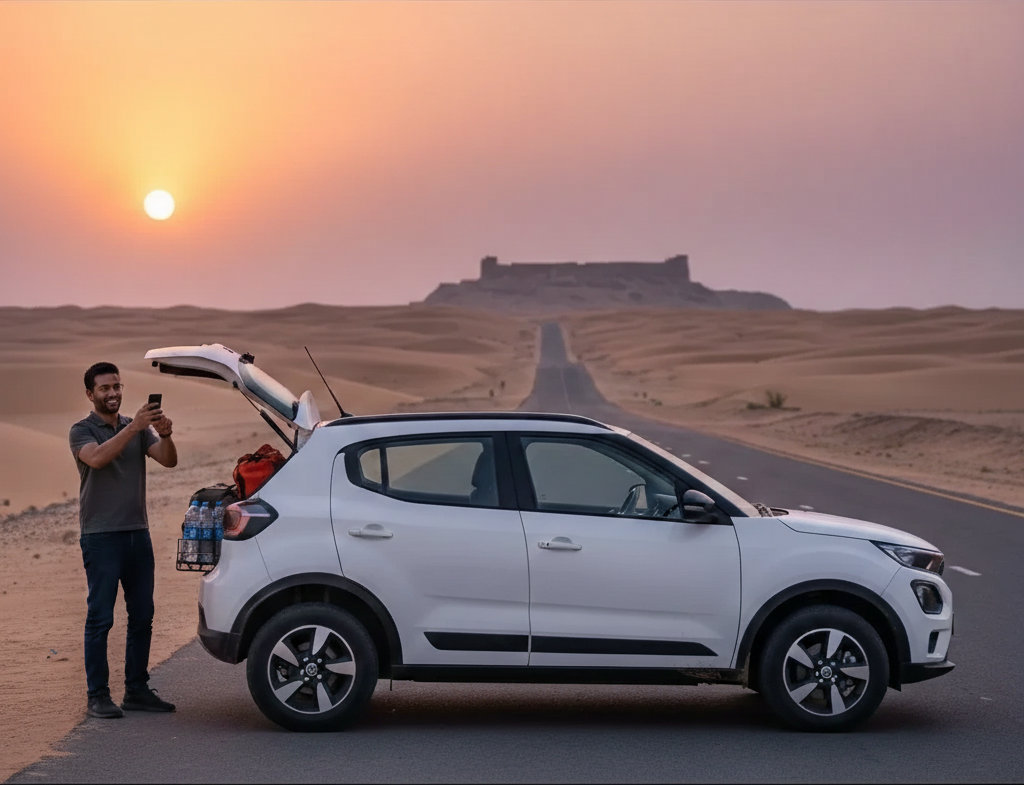
The facelift keeps the familiar bold, muscular stance of the Punch but incorporates mild cosmetic changes for a fresher look. Up front, there’s a revised bumper and grille design with sleeker LED headlights and daytime running lights. The signature connected LED tail lamps remain, but minor tweaks to the alloys and badging give it a contemporary edge.Overall, it’s an evolutionary refresh rather than a dramatic redesign—practical for a car that’s already a sales hit. The high ground clearance (around 190mm) and rugged SUV proportions continue to make it ideal for urban potholes and light off-road use.
Interior and Features
Step inside, and the cabin feels familiar yet improved in select areas. Higher variants now boast larger dual 10.25-inch screens (one for the digital instrument cluster and one for infotainment), supporting wireless Android Auto and Apple CarPlay. The touch response is quick, and the interface is user-friendly for most functions.Key highlights include ventilated front seats (on top trims), a voice-assisted sunroof, cruise control, hill descent control, and a 360-degree camera. Safety remains strong with 6 airbags standard across variants, along with ISOFIX anchors and electronic stability control.
While some features have been rationalized compared to the pre-facelift model (like certain omissions in lower trims), the overall package feels premium for the segment. The cabin is well-insulated, ride quality is superb over rough roads, and rear space is decent for a sub-4m SUV.
Step inside, and the cabin feels familiar yet improved in select areas. Higher variants now boast larger dual 10.25-inch screens (one for the digital instrument cluster and one for infotainment), supporting wireless Android Auto and Apple CarPlay. The touch response is quick, and the interface is user-friendly for most functions.Key highlights include ventilated front seats (on top trims), a voice-assisted sunroof, cruise control, hill descent control, and a 360-degree camera. Safety remains strong with 6 airbags standard across variants, along with ISOFIX anchors and electronic stability control.
While some features have been rationalized compared to the pre-facelift model (like certain omissions in lower trims), the overall package feels premium for the segment. The cabin is well-insulated, ride quality is superb over rough roads, and rear space is decent for a sub-4m SUV.
Powertrain and Performance
The big story is under the skin. Tata has ditched the previous cylindrical cells for prismatic ones in the new 30 kWh and 40 kWh battery packs (up from 25 kWh and 35 kWh earlier). This brings higher energy density, better thermal management, and improved packaging.Paired with a new compact 6-in-1 integrated electric drive unit, the system is lighter (around 28% weight reduction in key components), more efficient (up to 6% better), and simpler with fewer connections.Power outputs:
- 30 kWh variants: Around 88-95 hp
- 40 kWh variants: Up to 128-129 hp and 154 Nm torque
Acceleration feels peppy, with a claimed 0-100 km/h in about 9 seconds for the larger battery version—noticeably quicker in real-world overtakes thanks to instant torque. The drive is refined, silent, and composed, with well-controlled body roll and confident handling on curves. Braking (now with rear drums in some setups) is reassuring, though pedal feel takes a moment to get used to in regenerative modes.Drive modes (Eco, City, Sport) allow tailoring for efficiency or fun.
Range and Charging – The Real-World Test
Tata claims impressive figures:
- 30 kWh: 365-375 km (ARAI/MIDC)
- 40 kWh: 468 km (ARAI)
Under Tata’s C75 real-world testing (based on customer data), expect 260-275 km from the smaller pack and 335-355 km from the larger one in mixed driving with AC on—figures that align closely with reviewer experiences.
In detailed drive tests (city + highway mixes, AC on, normal driving with some luggage), the 40 kWh variant often delivers 320-350+ km comfortably, with efficiency improving in Eco mode. Aggressive highway runs or heavy AC use can drop it toward the lower end, but it’s a solid improvement over the pre-facelift’s ~300 km real-world max.
Charging is quicker too: Up to 65 kW DC fast charging (20-80% in ~26-30 minutes on the larger pack), with a handy 135 km top-up in 15 minutes at compatible stations. Home charging remains practical with the included options.For a full 100-0% range test on the 40 kWh Long Range variant (mixed city-highway, moderate AC, varied speeds), testers have reported figures around 340-355 km in realistic conditions—proving it’s more than capable for daily commutes (most users won’t drain to 0% often) and weekend getaways without range anxiety.
Pricing and Value
Starting at around ₹9.69 lakh (ex-showroom) for the base 30 kWh Smart variant and going up to ₹12.59 lakh for the top Empowered+ S (40 kWh), the facelift is cheaper than before—some top variants see reductions of up to ₹1.35-1.85 lakh.There’s also the innovative Battery-as-a-Service (BaaS) option, dropping the upfront price to ~₹6.49 lakh with a per-km battery usage fee (as low as ₹2.6/km), making it even more accessible.With lifetime warranty on the high-voltage battery (unlimited km), the ownership math looks strong—especially against rivals like the MG Comet EV or Citroen eC3.
Verdict
The 2026 Tata Punch EV facelift isn’t a revolution, but it’s a smart evolution: more range, better efficiency, quicker charging, and lower prices make it an even stronger proposition in the sub-₹15 lakh EV space.It’s relaxing in traffic, capable on highways, practical for families, and now offers genuine long-range usability without compromise. If you’re eyeing an affordable, no-fuss electric SUV for city life with occasional outstation runs, this updated Punch EV punches well above its weight.Highly recommended for budget-conscious buyers seeking reliability and real-world usability.